Accelerating and expanding translational muscle research
The UW Center for Translational Muscle Research (CTMR) is funded by the National Institute of Arthritis and Musculoskeletal and Skin Diseases (NIAMS) to provide a unifying organization for muscle research in the heart of Seattle’s biomedical research community. The goal of the Center is to facilitate new collaborations, recruit new investigators, bring clinicians and researchers together, and provide access to state-of-the-art approaches in multi-scale biomechanics, metabolism, and quantitative-computational analysis, to accelerate translational research efforts at the UW.
Latest News:
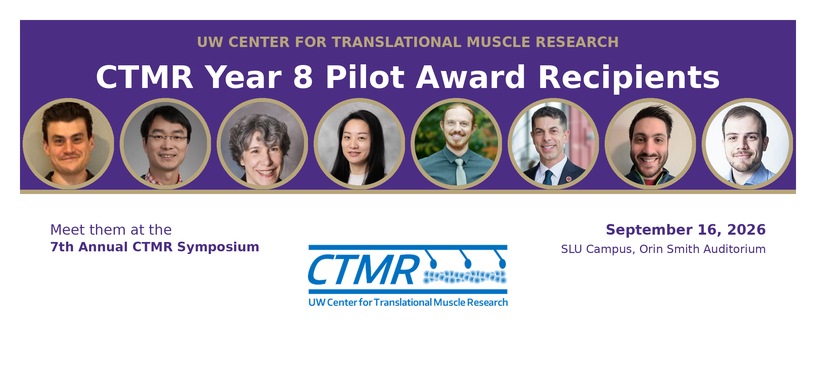
Announcing the CTMR Year 8 Pilot Award Recipients
We are excited to announce the recipients of the Center for Translational Muscle Research (CTMR) Pilot Award Program for Year 8! This program supports innovative, early-stage research projects that advance…
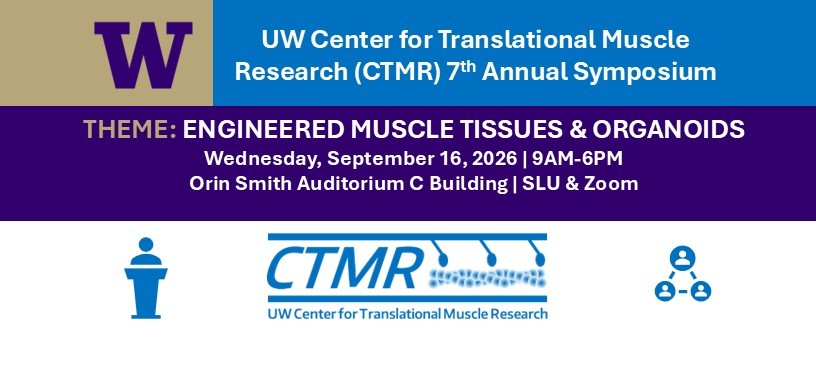
7th Annual CTMR Symposium- Register and Submit your Abstract
We hope you can join us for the 7th Annual CTMR Symposium! WHEN: Wednesday, September 16, 2026 | 9:00am – 6:00 pm PT WHERE: UW South Lake Union (SLU) campus…

2026 Pilot Applications Open!
We are pleased to share the request for proposals for the 2026 CTMR Pilot Awards. Please see the information on our website Pilot Grants – UW Center for Translational Muscle Research. The CTMR supports the…
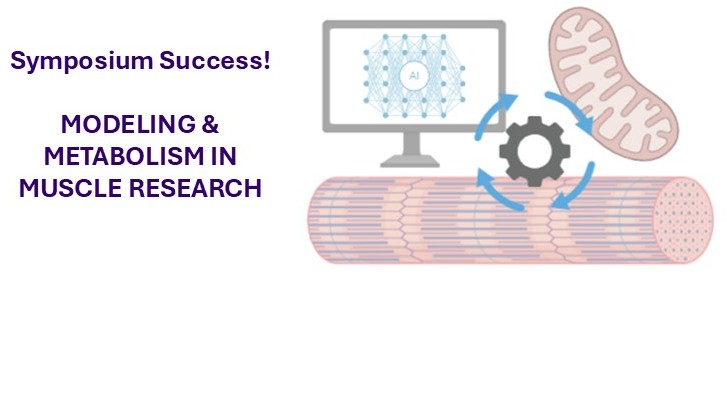
A Vibrant Showcase of Muscle Research at the 2025 CTMR Symposium!
This past November, the Center for Translational Muscle Research celebrated another year of pioneering muscle research at the 6th annual CTMR Symposium. This year, the symposium brought together a community…
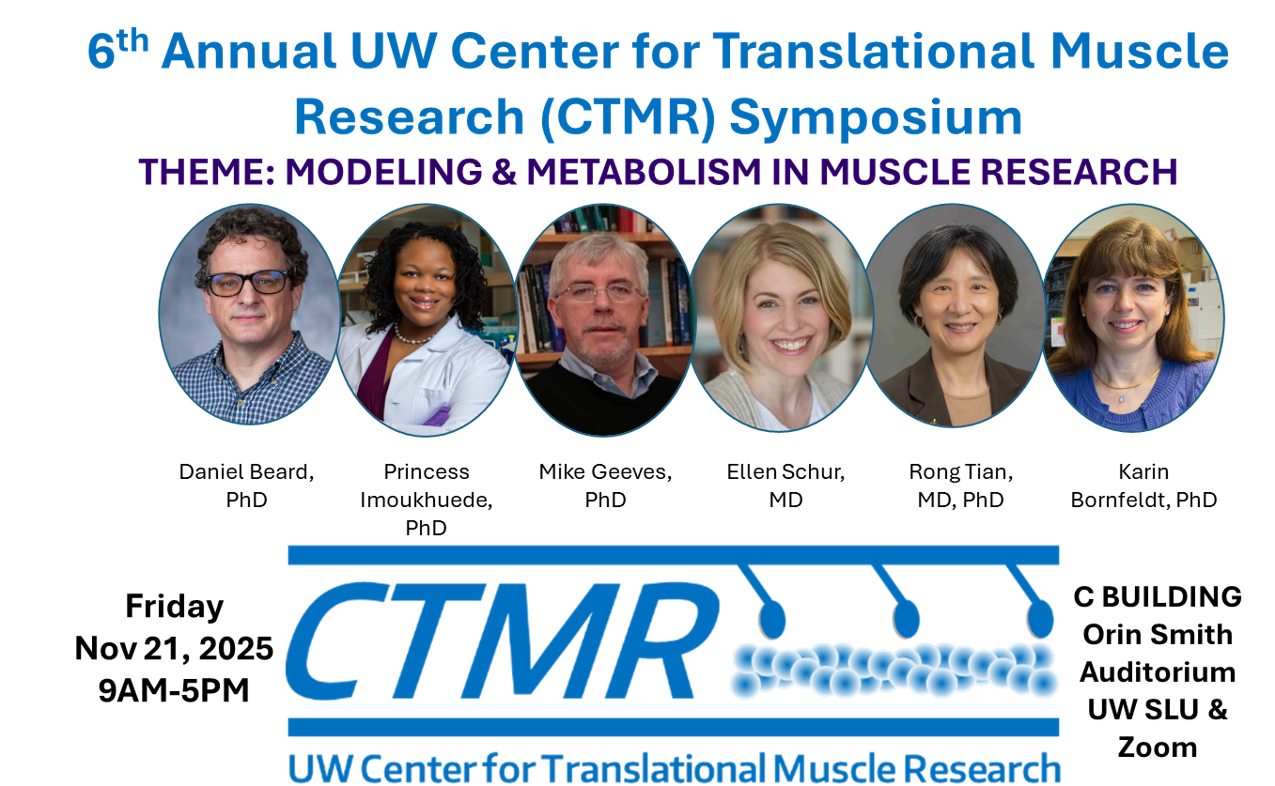
6th Annual CTMR Symposium- Friday, November 21, 2025
Last chance to register for the 6th Annual Center for Translational Muscle Research (CTMR) Symposium happening THIS Friday, November 21st at SLU and on Zoom! The symposium will be held in a hybrid format. Information for in-person participation…
Upcoming Events:
Sarcomere Society:
Online bi-weekly seminar series, Thursdays 8-9 am Pacific Time, covering current state-of-the-art research related to sarcomere structure and function.
Join our listserv to receive email notifications of Sarcomere Society presentations and Zoom links to attend.
Contact the Sarcomere Society Speaker Selection Committee – Drs Matt Childers & Joe Powers – to let us know about exciting new research you would like to present at an upcoming seminar (mcc7fb@uw.edu orpowersjd@uw.edu)
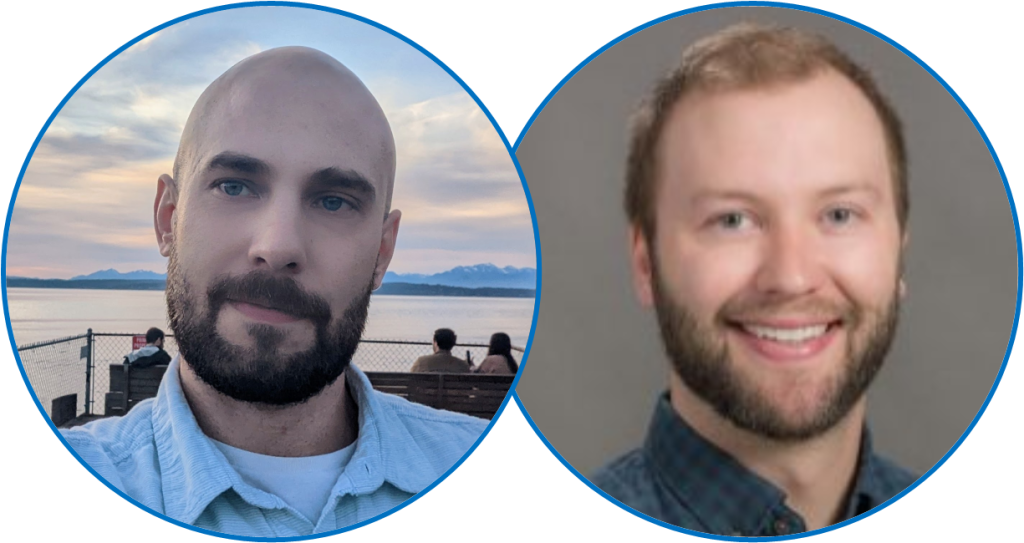
Oct 8, 2026
Speaker: TBA
Talk Title: TBA
Oct 22, 2026
Speaker: TBA
Talk Title: TBA
Nov 5, 2026
Speaker: TBA
Talk Title: TBA
See the Events Page for a list of past talks.
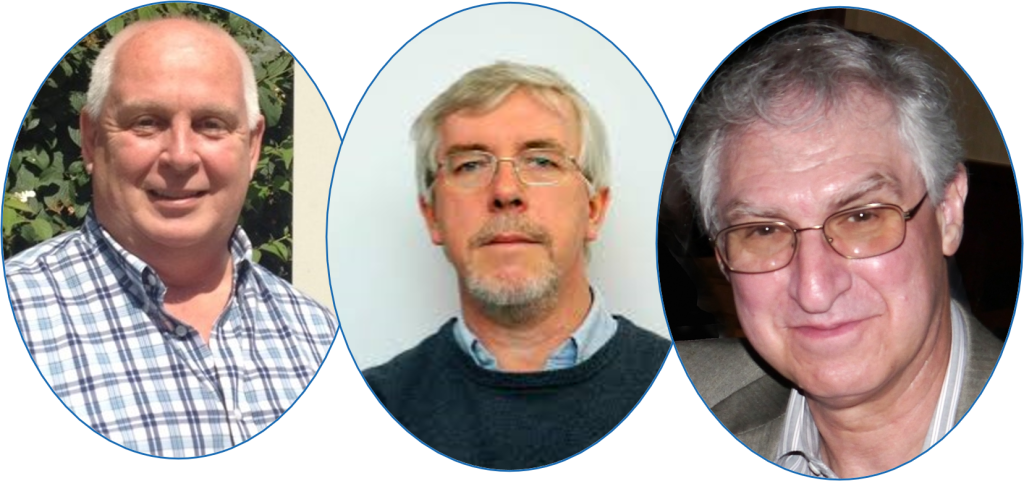
The International Sarcomere Society Seminar Series was founded by Drs. Mike Regnier, Mike Geeves, and Bill Lehman.
Resource Cores
Mechanics & Devices Core
The Mechanics and Devices Core provides state-of-the-art measurements of muscle biomechanics at multiple levels of integration, and develops new assays for maturation and assessment of early stage muscle.
Metabolism Core
The Metabolism Core provides tools for in-depth measures and analysis of metabolomics, energetics, cell respiration and mitochondrial function.
Quantitative Analysis Core
The Quantitative Analysis Core provides computational and statistical tools for understanding disease, suggesting new
therapeutic targets, and understanding mechanisms.